What does visibility in search and AI mean?
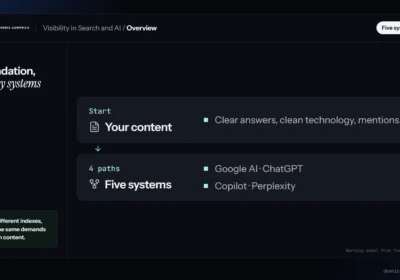
It is the question of whether your content shows up where your audience looks for answers today. That still means classic search results, but increasingly also Google AI Overviews, AI Mode, ChatGPT, Perplexity and Gemini. There, what counts is not only the position but whether your brand is mentioned and your page is cited as a source.
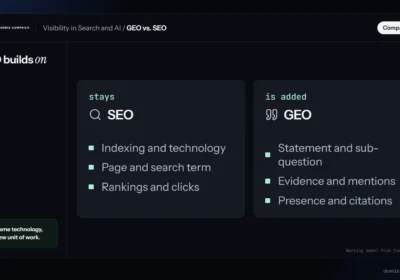
SEO, GEO and AEO are not separate disciplines. Google itself says that optimizing for AI features in search is still SEO. The fundamentals stay the same: indexable pages, clear answers, your own expertise. What is new is that individual paragraphs serve as sources and that visibility no longer automatically means clicks.
What makes content citable?
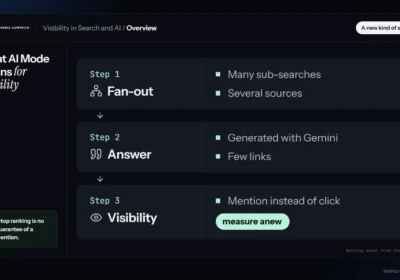
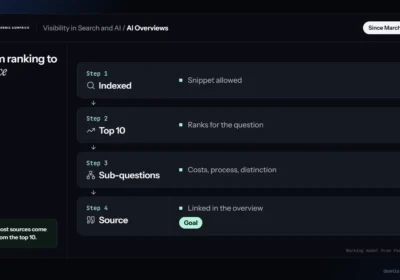
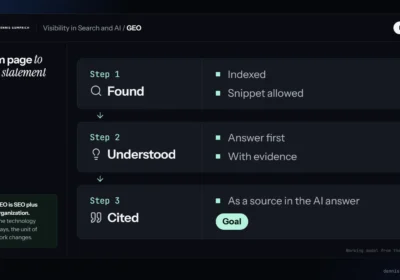
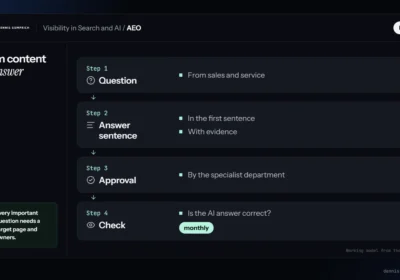
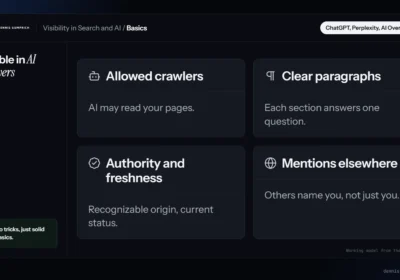
A clear answer directly below the question, figures backed by source and date, your own experience instead of a summary of what is already known. AI systems break a question down into many sub-questions and look for the right passage for each. If you answer a sub-question clearly in two or three sentences, you have a good chance of appearing as a source.
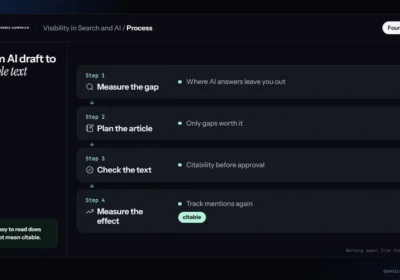
This leads to a practical rule: before approval, check which of your audience's questions the text answers and which it does not. Close the gaps in the draft, not after publication.
How do you anchor this in the content process?
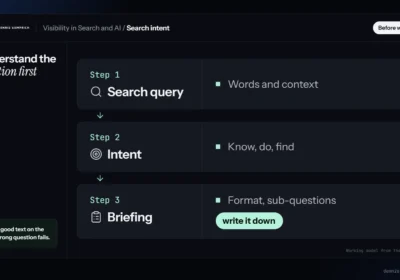
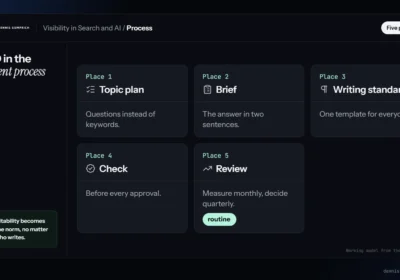
Not as an extra step at the end, but in the briefing. If your audience's questions, the key messages and the evidence are already in the briefing, the citable text emerges in the first draft. The review before approval then becomes a comparison instead of rework.
How do you measure visibility when clicks disappear?
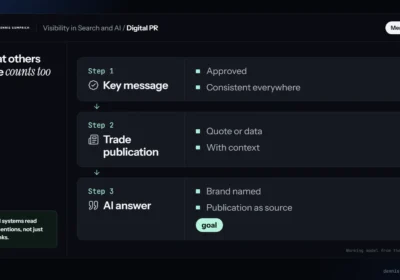
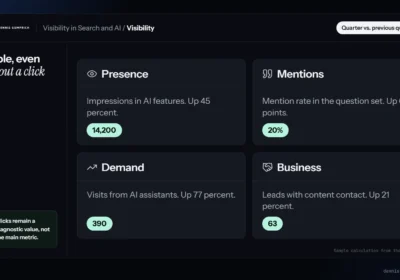
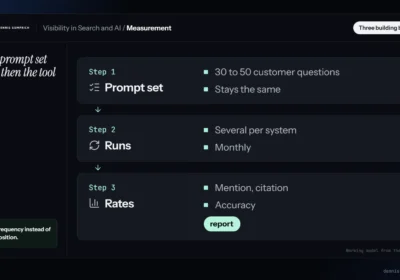
By mentions and citations, not just sessions. When an AI summary appears, users click on search results much less often. So add two questions to rankings and clicks: are we mentioned for the most important questions of our audience, and with which statement? And how are brand searches and direct inquiries developing?
Frequently asked questions
Is GEO something different from SEO?
Less than the new name suggests. According to Google, optimizing for AI features in search remains SEO: indexing, helpful content and your own expertise. What changes is the unit that counts. Instead of a whole page, a single paragraph is cited, and instead of a click, the mention counts.
Is SEO still worth it when AI delivers the answers?
Yes, because AI answers build on indexed pages. If you are not found in classic search, you are rarely cited in AI answers either. A good ranking does not guarantee a mention, though. That is why you also need clear, backed answers to the questions of your audience.
Do we need an llms.txt?
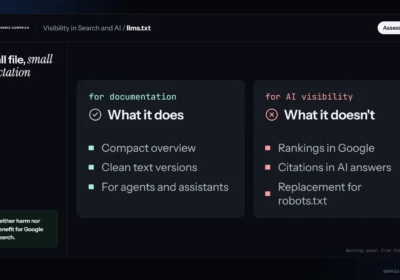
Not for Google Search. Google says it does not use the file for its AI features. It is more important that your pages are indexable, snippets remain allowed and the content is available as text.
Where is the best place to start?
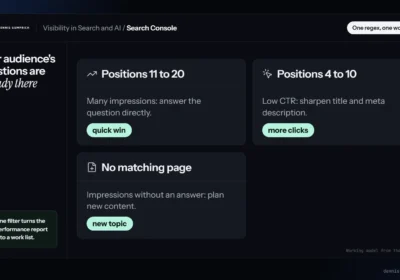
With the ten questions sales and service hear most often. Check whether your website answers each of them clearly in two or three sentences and whether you are mentioned for these questions in Google and ChatGPT. The gaps are your first topic list.
Related topics
If visibility is to become a fixed part of your process, continue with Content Operations.
If you want AI drafts to be accurate and sound like you, you will find the foundations in AI Quality and Governance.
If you want to know where your content shows up in Google and AI answers and where it does not, let us look at your most important questions together.
Book a callLast updated: November 26, 2026