How do you find the right content software?
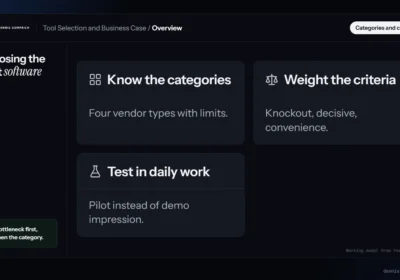
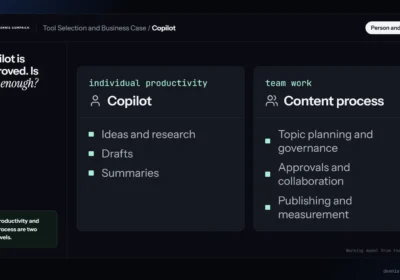
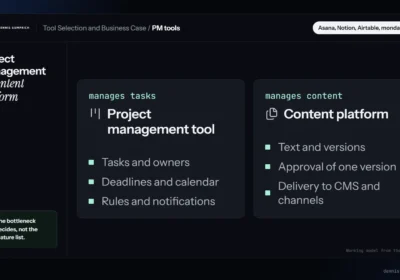
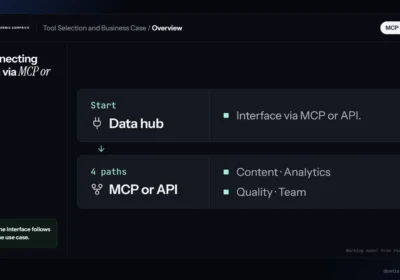
Through your bottleneck, not through the feature set. There are four clearly distinct types of AI content software that solve different problems and are hard to compare with each other.
If you mainly lack writing speed and fewer than three people work on content, a writing tool is enough. As soon as more than three people work on the same content and approvals cross department boundaries, you need a platform. If you skip this step, six months later you use 20 percent of the features, and the original bottleneck is still there.
What belongs in the requirements catalog?
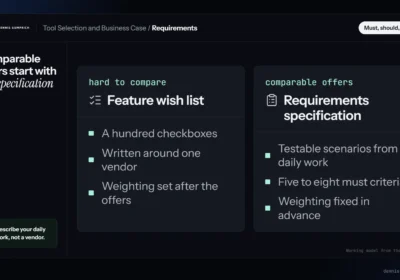
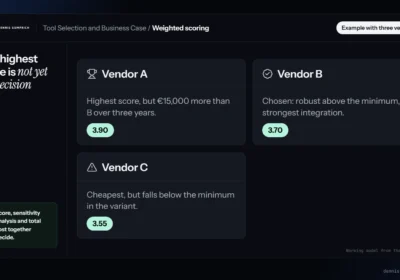
Requirements in three levels: must, should and could. An unmet must criterion excludes the vendor without further evaluation. Keep the number of must criteria small, five to eight at most, otherwise nobody is left.
The most frequently overlooked point is the license question for readers and approvers. In almost every organization their number clearly exceeds that of active editors, and it is exactly these people who drive the license total.
How do you justify the investment?
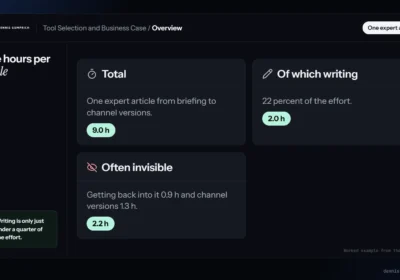
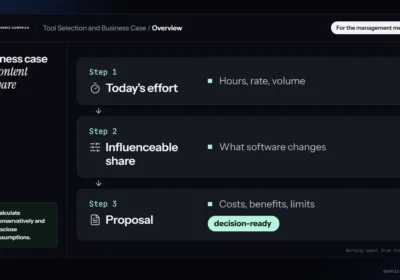
With three figures from your own operations: hours per piece of content including all coordination, internal hourly rate on a full cost basis and annual volume across all channels. At seven hours, EUR 75 and 240 pieces, that is EUR 126,000 in production effort per year.
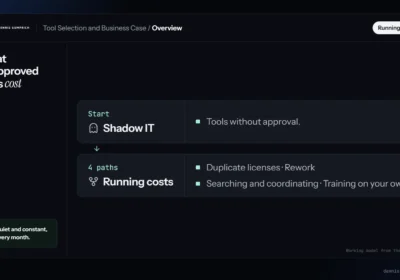
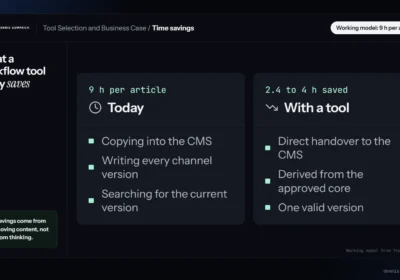
What matters is not this total but the share spent on coordination, switching tools and rework instead of substantive work. Staff cuts do not belong in the business case: hardly any marketing team gets smaller after a software rollout.
What makes the rollout successful?
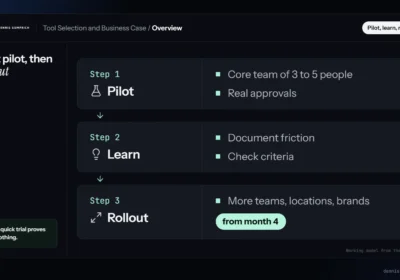
A pilot is productive operation on a small scale: a core team of three to five people plus an approving role, real topics with a publication date, stored context and real approval paths. Open access for everyone interested is not a pilot. In the end, everyone has an opinion and nobody has insights.
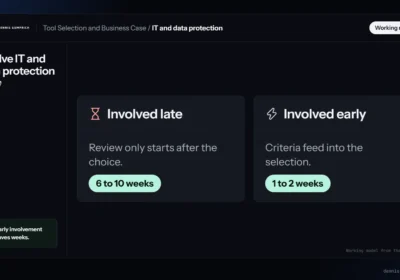
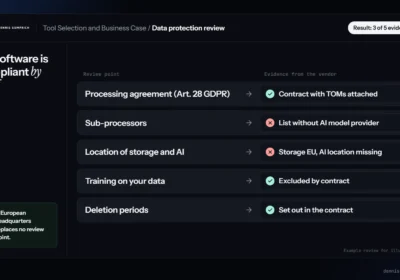
The rollout starts according to criteria, not the calendar. And IT and data protection belong in the requirements phase: if their review only starts after the selection, it costs six to ten weeks instead of one to two.
Frequently asked questions
How long does a proper tool selection take?
Six weeks are enough for a robust decision. It usually only takes longer when IT and data protection join too late and documents have to be submitted afterwards. Every additional request costs a complete review cycle.
How many vendors belong on the shortlist?
Two to three. From four candidates on, the depth of comparison per vendor drops so far that the differences can no longer be worked out cleanly. Management often requires at least one comparison vendor anyway, which sets the lower limit.
When does a platform pay off instead of individual tools?
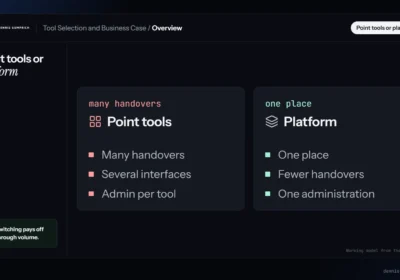
Not from a certain team size but from a certain number of handovers per piece of content. Up to two handovers, individual tools are fine. With three to five, it pays to consolidate tools. From six on, versions drift apart, and a platform deserves serious consideration.
Do we have to migrate all existing content?
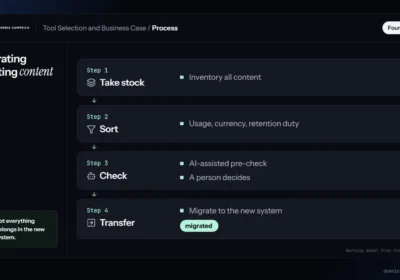
No. Only what is used and linked on an ongoing basis is migrated completely. Templates and approved wording are prepared rather than copied, and anything subject to evidence requirements is archived. What matters is a cut-off date from which the old system is only read, not written to.
Related topics
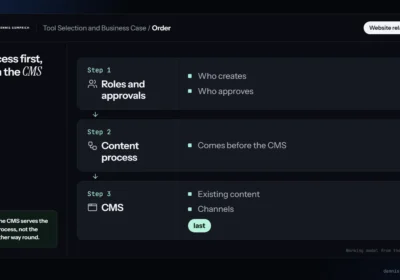
If it is not the tool that is missing but the process behind it, continue with Content Operations.
If it is about brand voice, review and labeling, you will find the foundations in AI Quality and Governance.
If you are working on a requirements catalog or a business case right now, let us go through your list together and identify which criteria really tip the balance.
Book a callLast updated: November 26, 2026