What is content operations?
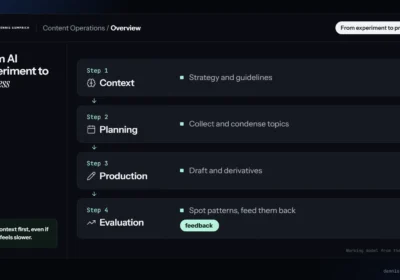
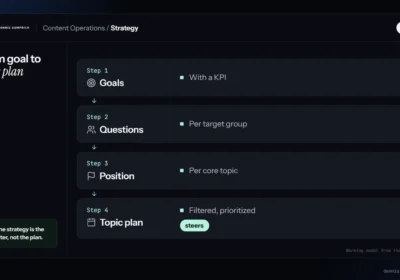
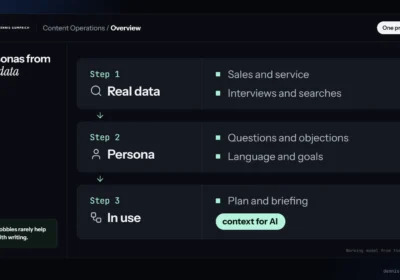
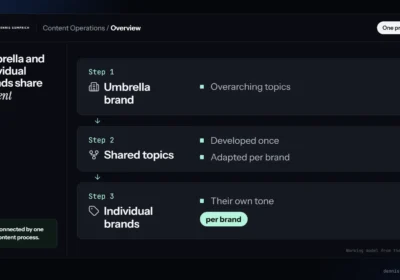
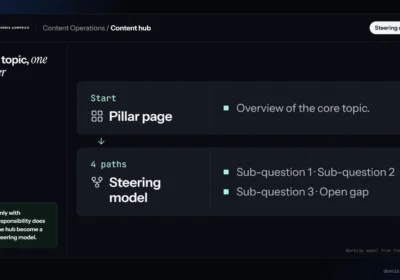
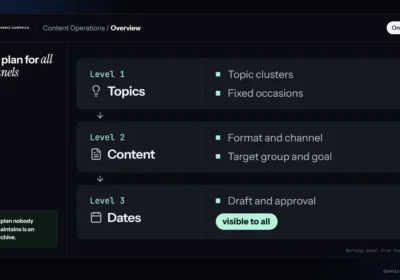
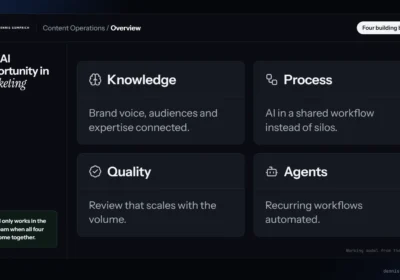
Content operations is the order in which content is created: who decides on topics, how planning works, how content moves through approvals and where the context lives that AI works with. It does not describe a tool but four levels that build on each other.
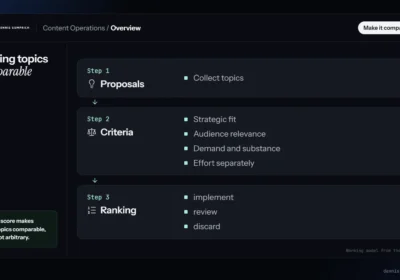
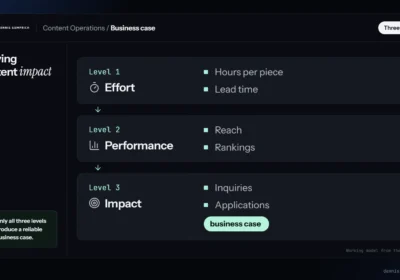
Strategy and context rarely change but are needed constantly. Topics and planning generate the most coordination loops. Production and approval determine the cycle time. Reporting and feedback close the loop, and this is the weakest level in most teams. Many measure reach, but few can name which planning decision changed as a result in the last quarter.
How do you know your content processes are not holding up?
Not by gut feeling but by observable symptoms. Five of them almost always appear together:
- The status in the plan is only correct after someone asks.
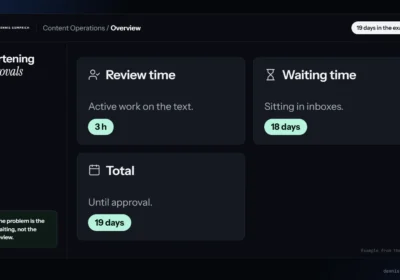
- Approvals take weeks, the review itself minutes.
- Two people create the same topic without noticing.
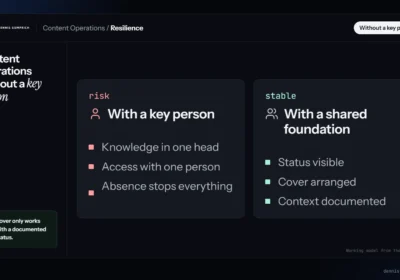
- Production stops during vacation or illness.
- Nobody is authorized to turn down a request.
The last symptom is the most expensive. A team without the authority to say no works permanently at its capacity limit and experiences a decision problem as a resource problem.
Where do you start?
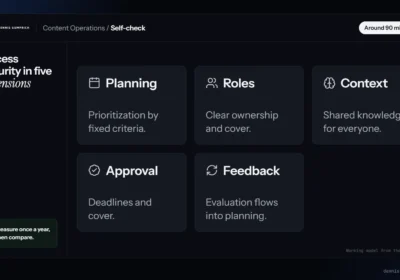
With the bottleneck, not with the dimension that seems most important to you. First, collect a number: a maturity assessment across five dimensions takes around 90 minutes and needs three to five people from different roles. Then work on the lowest dimension, not the most important one. The throughput of the chain depends on its weakest link, no matter how good the others look.
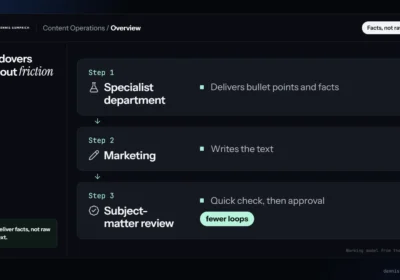
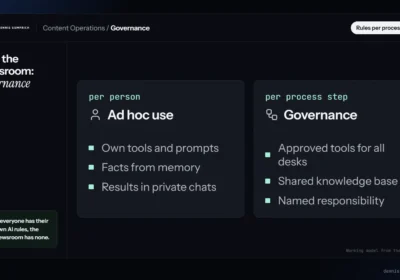
The most important step in the model is the one from level two to level three, and it is possible without buying anything. Three changes are enough: a named person instead of a status on every item, a deadline and a deputy for every approval stage, and context in one place that everyone knows.
What does AI have to do with it?
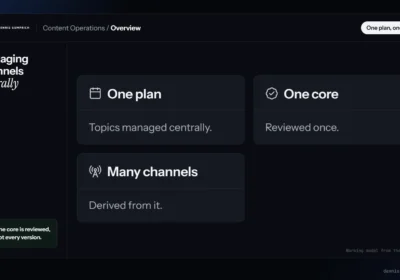
Less than most people expect, and in a different place. The reliable benefit lies in deriving and adapting from approved core content, because the review of the substance has already happened there. In the first draft, the rough version is created quickly, but rework eats up the head start if context and brand voice are missing.
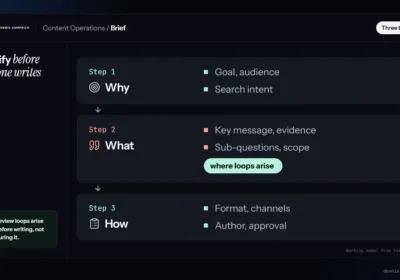
In approvals, AI takes nothing off your hands, because these are organizational processes, not writing tasks. If an article sits with a department for three weeks, no model shortens that time. That is exactly why rollouts justified by time savings disappoint when nothing changed in the approval path.
Frequently asked questions
Does content operations need its own tool?
Not necessarily. The most important maturity step consists of three decisions and no purchase: a named person instead of a status on every item, deadlines and deputies for every approval stage, and context in one shared place. A tool only pays off when the transitions between steps dominate the work.
From what team size is it worth it?
From about three people working on the same content, or as soon as approvals cross department boundaries. Below that, agreements are enough, and every additional structure costs more than it saves.
How long does the change take?
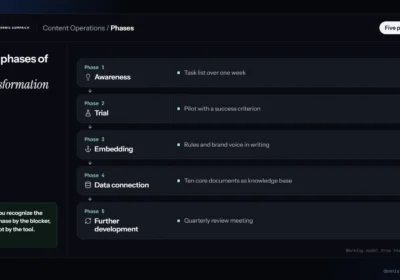
The step from a shared plan to a described process is a matter of weeks. Operations that run day to day without anyone having to remind people take quarters. The difference is not in the description but in the place: context and responsibility need to be available where the work happens.
Who should be responsible for content operations?
A role, not a person. What matters is topic ownership with the authority to reject and postpone topics. This is exactly the role missing in most content teams, and without it every request automatically becomes an assignment.
Related topics
If the processes are in place and the quality of AI results is the issue, continue with AI Quality and Governance.
If the bottleneck lies in the handovers between tools, you will find the basis for your decision in Tool Selection and Business Case.
If you are working on one of these questions right now, let us look at your situation together and pin down where the bottleneck really is.
Book a callLast updated: November 26, 2026